How to Start a Family History Project This Year
2024-12-15 · Tameka Riley
Why Start Now
Every family has a historian — even if they don't know it yet. Maybe it's you. Maybe it's someone in your family who always remembers the details, asks the questions, keeps the old photos.
The problem is that most family historians never write anything down. The stories live in their heads, and when they're gone, the stories go with them.
A family history project changes that. It's the deliberate act of gathering, organizing, and preserving your family's story so it survives long after any single person.
Step 1: Gather What You Already Have
Before you start interviewing anyone, collect what already exists:
- Photographs — old albums, loose photos, slides, digital files
- Documents — birth certificates, marriage licenses, letters, diaries, military records
- Family records — bibles with family pages, funeral programs, obituaries
- Objects — heirlooms with stories attached: a grandmother's ring, a father's tools, a great-aunt's recipe box
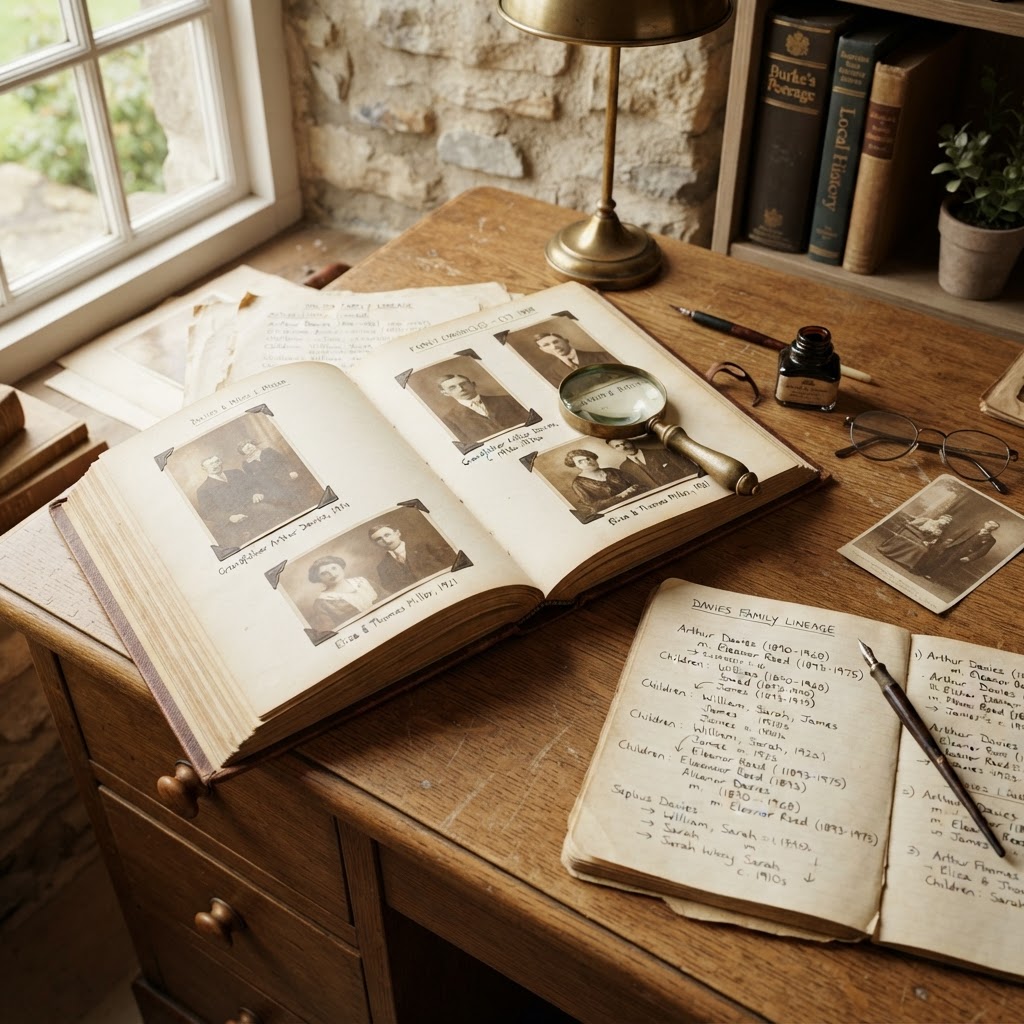
Spread everything out on a large table. Sort by family branch, by date, or by person. Don't worry about organizing perfectly — just get it all in one place.
Step 2: Interview the Elders
Your living relatives are the most valuable resource you have. Their memories won't be available forever.
Start with the oldest relatives and work your way down. Ask open-ended questions:
- What was your childhood like?
- How did you meet your spouse?
- What's the most important lesson your parents taught you?
- What do you remember about your grandparents?
- What family stories do you want passed down?
Record the conversations — audio or video. Take notes. And most importantly, listen.
Step 3: Record It in Writing
Oral stories are fragile. Written records are durable. The most important step in any family history project is getting the stories out of people's heads and onto paper.
Use a dedicated journal — one designed for family history, with prompts that help you capture different aspects of your family's story. Roots & Reflections journals are made for exactly this purpose, with guided sections for family memories, wisdom, traditions, and final wishes.
Step 4: Organize by Generation
As you gather stories, organize them by generation:
- Grandparents' generation — origin stories, immigration, wartime, early life
- Parents' generation — courtship, career, raising a family, lessons learned
- Your generation — childhood memories, family traditions, what you want to pass on
- Future generations — letters to descendants, hopes, wisdom, family legacy
Step 5: Share and Continue
A family history project is never truly finished. New stories are created every day. New family members arrive. New memories are made.
Share what you've gathered with family members. Pass copies of photographs and documents to different branches of the family. And most importantly, make the project a living tradition — one that continues to grow and evolve.
You Don't Have to Do It All
Don't be intimidated by the scope. You don't have to write a 500-page genealogy. Even a single journal, filled with stories from one or two family members, is an irreplaceable treasure.
The goal isn't perfection. The goal is preservation.
Start with one interview. One story. One page. And let it grow from there.
Our guided legacy journals are designed to help you capture every generation of your family's story.