The Art of Handmade Paper: How Our Journals Are Crafted
2026-05-20 · Tameka Riley
A Three-Day Journey from Cotton to Page
In a world of mass production, we chose a different path. Every sheet of paper in our Leather Edition journals is handmade using techniques that have been passed down for centuries.
The process begins with raw cotton fiber — the same material that has been used to make the world's most enduring documents, from the Gutenberg Bible to the United States Constitution.
Day One: Preparation
The cotton fibers are soaked and beaten into a fine pulp. This process, called beating, determines the texture, strength, and absorbency of the final paper. Our artisans adjust the beating time based on humidity, temperature, and the specific batch of cotton — no two days are exactly alike.
Day Two: Forming
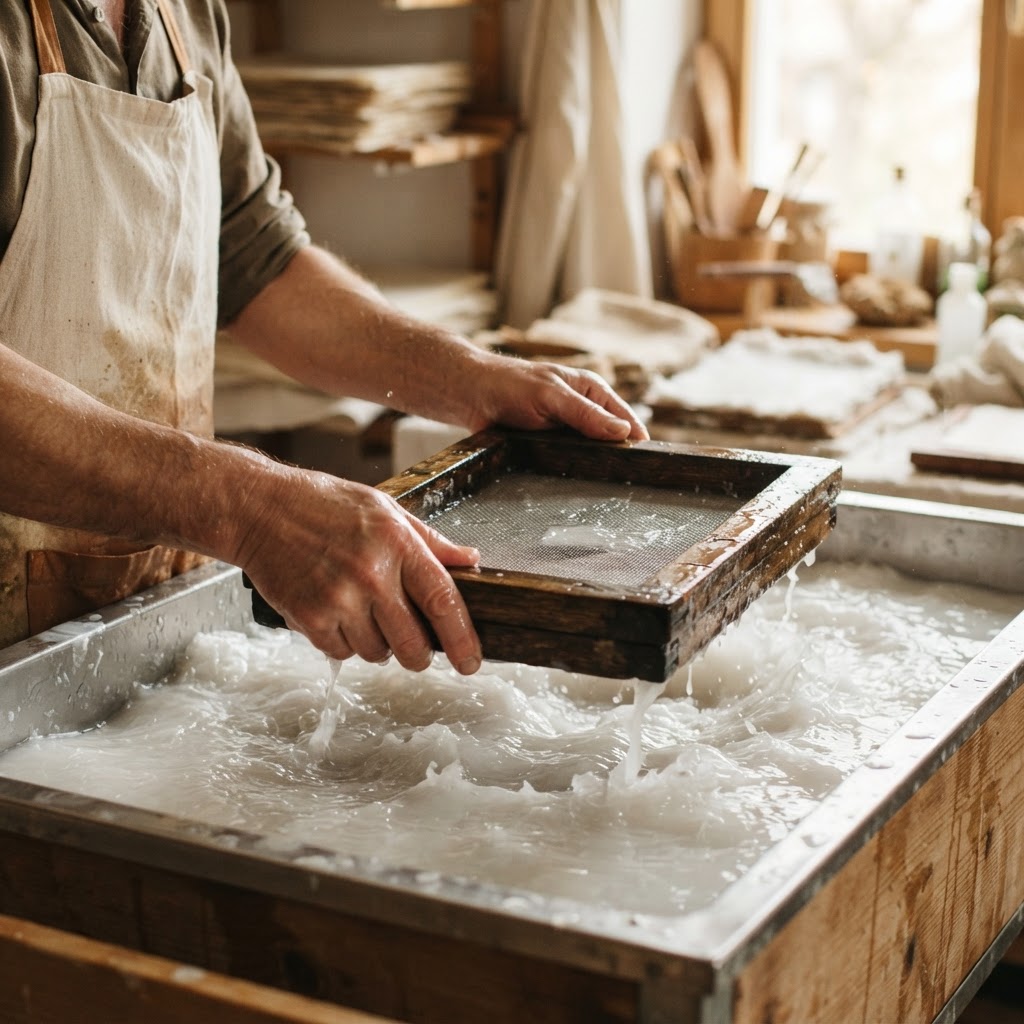
The pulp is mixed with water and poured onto a flat screen called a mould. The artisan uses a gentle rocking motion to distribute the fibers evenly, then lifts the mould to let the water drain. What remains is a single, wet sheet of paper — still fragile, still finding its shape.
This is where the deckled edge comes from. The natural border created by the frame of the mould gives each page its signature torn-edge finish.
Day Three: Drying and Pressing
The sheets are carefully transferred onto felt and pressed to remove excess water. They're then air-dried naturally — never machine-dried — which preserves the subtle texture that makes handmade paper feel alive under your fingertips.
Why It Matters
Machine-made paper lasts decades. Handmade cotton paper lasts centuries. When you write your family's story in a Roots & Reflections journal, you're writing on pages designed to endure as long as the stories they hold.